When Humanity First Took to the Skies
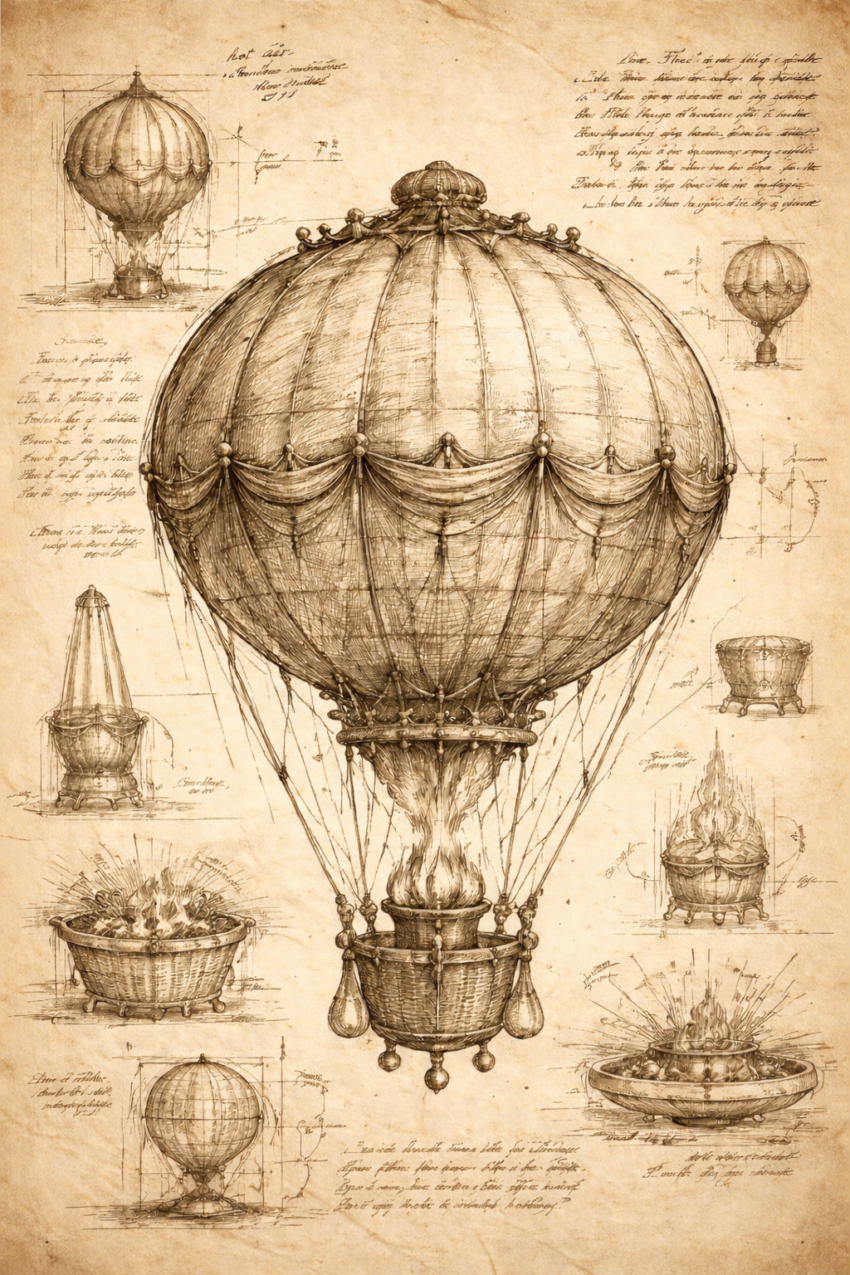
In 1783, humanity achieved a technical milestone that would reshape exploration, science, and imagination: the first manned hot-air balloon flight by the Montgolfier brothers. Ascending to approximately 1,000 meters, this modest flight demonstrated the potential to transcend natural limits, literally lifting humans into the third dimension.
While simple in principle — a fabric envelope trapping heated air or hydrogen — the air balloon was a civilization-altering invention, comparable in scope to the wheel. It introduced humanity to aerial mobility, atmospheric science, and the concept of expanding operational space beyond the ground.
Yet, in the last 50 years, few innovations have approached this level of fundamental impact.
The Technical and Societal Impact of Balloons
Air balloons catalyzed new scientific methodologies, engineering paradigms, and strategic capabilities:
- Atmospheric Science: The first balloon ascents carried barometers, thermometers, and hygrometers, producing the earliest upper-atmosphere measurements, a precursor to modern meteorology. By 1794, the French government launched 60+ scientific balloon flights, mapping wind currents and temperature gradients up to 5,000 meters.
- Military Reconnaissance: Balloons were deployed during the American Civil War (1861–1865) and the Franco-Prussian War (1870–1871) for observation, altering military intelligence collection.
- Inspiration for Engineering: Balloon flight directly inspired the development of dirigibles, airplanes, and high-altitude platforms, forming the foundation for modern aviation and aerospace engineering.
Key technical data:
- Envelope volumes ranged from 1,200 m³ to 2,500 m³ for manned flights.
- Maximum recorded altitude in early ballooning: 7,200 meters (by Jacques Garnerin, 1802).
- Balloon technology enabled payload delivery experiments exceeding 100 kg, a primitive precursor to modern stratospheric research platforms.
Air Balloons as a “Wheel-Level” Innovation
Wheel-level innovations are defined by their ability to reshape society, expand human capability, and create entirely new technological domains. Balloons meet all three criteria:
- Societal Reach: For the first time, humans could observe Earth from above, altering navigation, mapping, and military strategy.
- Technological Cascade: Balloon flight led to innovations in propulsion, aerodynamics, and material science, many of which underpin today’s aerospace sector.
- Imagination and Vision: Balloons transformed collective human ambition, demonstrating that limits could be overcome through creative engineering.
By comparison, modern innovations — even transformative ones like AI or smartphones — rarely generate entirely new operational domains; they often optimize existing ones rather than open completely new dimensions.
Comparative Wheel-Level Innovations in History
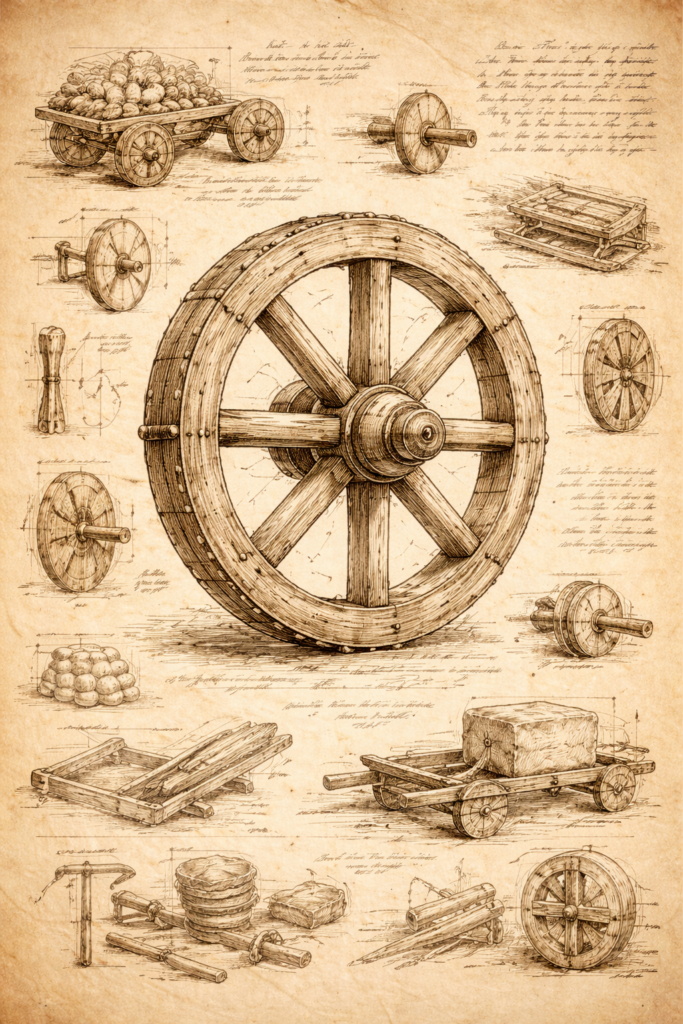
- Wheel (~3500 BCE): Transformed transport, trade, and mechanical engineering.
- Fire (~1,000,000 BCE): Enabled cooking, metallurgy, and social organization.
- Printing Press (1440 CE): Democratized knowledge, reshaped culture, and accelerated innovation.
- Air Balloon (1783 CE): Opened the skies as a new operational space, catalyzing aerospace and meteorological science.
Modern parallel attempts:
- Smartphones (2007 CE): Redefined communication and access to information, but largely within pre-existing digital and physical infrastructure.
- AI / Deep Learning (2012+): Enhances productivity and decision-making but does not yet create a new domain of human operation comparable to aerial mobility.
The Innovation Gap: What Are We Missing
Today, humanity faces a fundamental innovation gap. While incremental improvements dominate, wheel-level breakthroughs are scarce:
- High-risk, high-reward engineering ventures are limited by regulation, capital intensity, and risk aversion.
- Cross-disciplinary synthesis — as seen in balloons (combining materials science, thermodynamics, and human physiology) — is increasingly rare.
- Operationally new domains — like the skies, previously opened by balloons — are mostly unexplored except in early-stage space and quantum initiatives.
Evidence:
- According to the Global Innovation Index 2024, investments are concentrated in software, AI, and biotech, whereas physical, infrastructure-defining technologies (transport, energy, aerospace) receive proportionally less funding.
- Patents for radical mobility or environmental engineering innovations have plateaued over the last 20 years, compared to a surge in the 19th and early 20th centuries.
The Future: Where Could the Next “Balloon-Level” Innovation Come From?
Potential domains for fundamental breakthroughs include:
- Space Elevation Platforms: Reusable orbital vehicles or high-altitude stratospheric platforms could redefine transport, logistics, and connectivity.
- Energy Revolution: Breakthroughs in fusion or compact nuclear energy could create new operational freedom for industry and society.
- Molecular Manufacturing: Programmable matter or atomically precise fabrication could open entirely new manufacturing paradigms.
- Human-Machine Integration: Brain-computer interfaces may enable entirely new dimensions of cognition, interaction, and productivity.
The pattern is clear: wheel-level inventions emerge when human curiosity meets bold engineering in unexplored domains — the sky, the atom, or the digital frontier.
Conclusion
Air balloons were more than a scientific curiosity; they were a wheel-level innovation that opened a new operational dimension for humanity. They remind us that the most transformative inventions do not merely optimize existing systems—they create new spaces for action, observation, and imagination.
Today, we have extraordinary technologies — AI, quantum computing, and CRISPR — but few initiatives are bold enough to redefine the operational space of civilization. Reclaiming the spirit of the balloon era may be essential if we want the next generation of wheel-level breakthroughs.
This blog post was written and photos are made with the assistance of Gemini, Copilot and ChatGPT, Sora based on ideas and insights from Edgar Khachatryan.