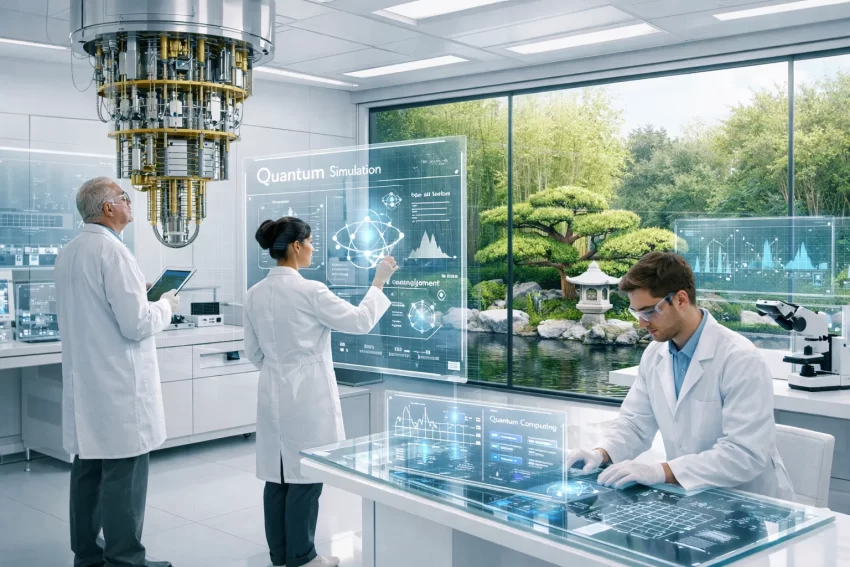
Introduction – The Quantum Frontier
Quantum computing is moving from theory to practical applications, promising to revolutionize chemistry, medicine, optimization, and AI. Major companies are building systems capable of solving problems impossible for classical computers, but the field is diverse, with multiple qubit technologies, architectures, and experimental approaches.
We are beginning to map the landscape — from today’s lab prototypes to potential personal quantum devices, and from mainstream qubits to rarely used or experimental technologies.
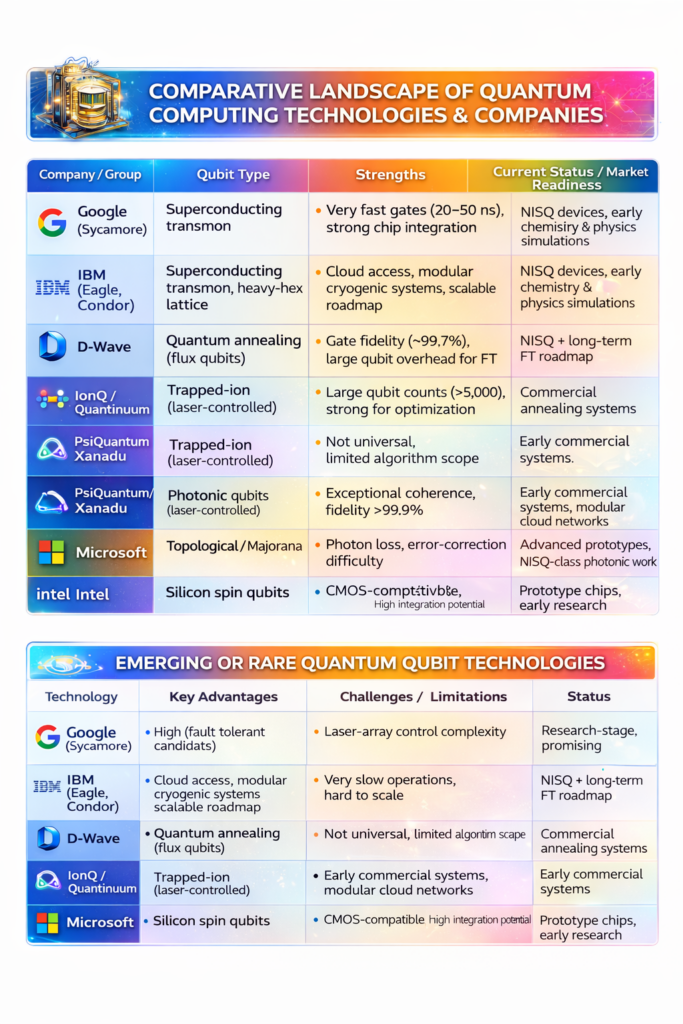
1. Google: Superconducting Qubits (Sycamore and Beyond)
- Type: Superconducting (transmon)
- Achievements: 53-qubit Sycamore, claimed quantum supremacy (2019)
- Strengths: Fast gate operations (~20–50 ns), chip integration
- Challenges: Decoherence, error correction, scaling to thousands of qubits
- Near-term: Larger NISQ devices, early chemistry simulations
2. IBM: Superconducting Qubits (Heavy-Hex Lattice)
- Type: Superconducting transmons, heavy-hex topology
- Roadmap: Eagle (127 qubits), Condor (1,121 qubits) → fault-tolerant systems
- Strengths: Cloud access, modular cryogenic systems
- Challenges: Gate fidelity (~99.7%), overhead for error correction
3. D-Wave: Quantum Annealing
- Type: Superconducting flux qubits (annealing)
- Focus: Optimization problems, large qubit counts (>5,000)
- Limitations: Not universal, specialized applications
4. IonQ & Quantinuum: Trapped-Ion Qubits
- Type: Trapped ions, laser-manipulated
- Strengths: Long coherence, high fidelity (>99.9%)
- Challenges: Slower gates, complex laser systems
- Near-term: Modular trapped-ion networks for cloud services
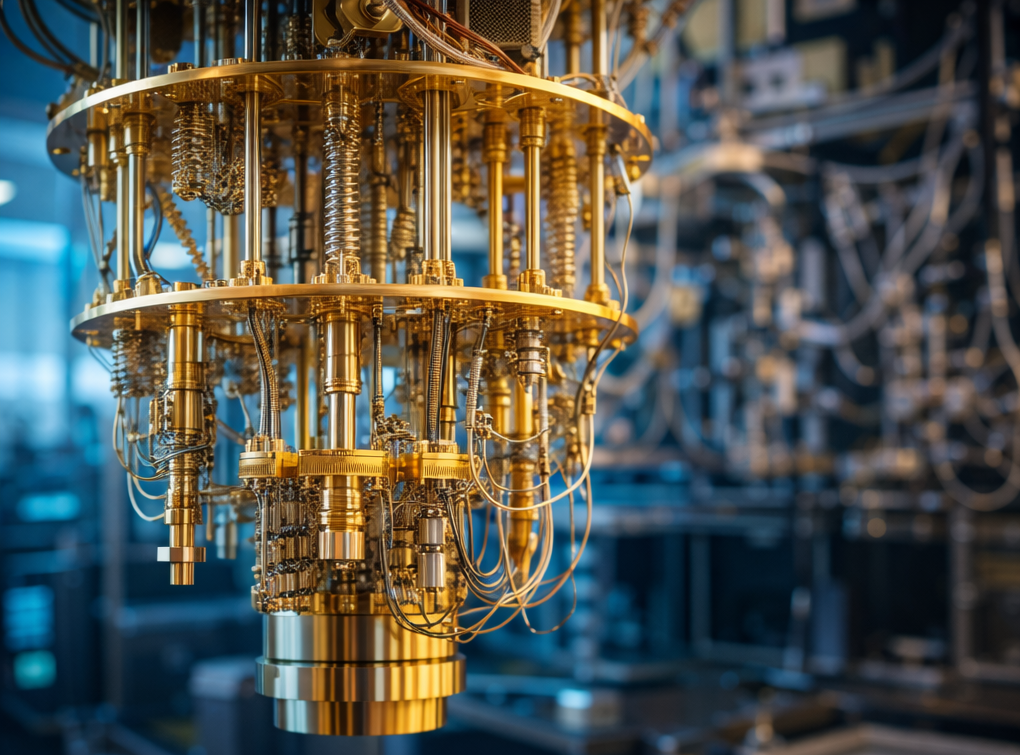
5. PsiQuantum & Xanadu: Photonic Qubits
- Type: Photons in optical circuits
- Advantages: Room-temperature operation, potentially massive scalability
- Challenges: Photon loss, error correction, complex sources/detectors
- Near-future: Million-qubit photonic systems for universal computation
6. Microsoft: Topological (Majorana) Qubits
- Type: Topological qubits using Majorana zero modes
- Status: Lab prototypes (Majorana 1)
- Potential: Fault-tolerant qubits, low-error systems
- Challenges: Fabrication, experimental validation
7. Intel: Silicon Spin Qubits
- Type: Electron spins in silicon quantum dots
- Advantages: CMOS-compatible, chip-scale integration
- Challenges: Maintaining coherence, scaling
- Potential: Basis for future compact personal quantum devices
Emerging or Rarely Used Technologies
Several promising approaches are not yet commercially deployed:
- Neutral Atom Qubits (Rydberg states): Highly scalable, long coherence, still research-stage.
- Nuclear Spin Qubits: Exceptional stability; experimental only.
- Quantum Dot Molecule Arrays: Multi-level qudits; dense, experimental.
- Anyon-based Topological Qubits beyond Majorana: Ultra low-error potential, lab prototypes.
- NV Centers & Rare-Earth Ion Qubits: Room-temperature quantum memory; experimental.
Roadmap to Personal Quantum Computers
Personal, laptop-sized quantum computers are still decades away, due to error correction, coherence, and cooling requirements:
| Technology | Personal Device Potential | Cooling | Estimated Timeline |
|---|---|---|---|
| Majorana / Topological | High | mK | 2035–2045 |
| Silicon Spin | High | 10–100 mK | 2030–2040 |
| Photonic | Medium-High | Room Temp | 2035+ |
| Superconducting | Low | <20 mK | 2040+ |
| Trapped-Ion | Low | Complex optics | 2040+ |
- Early versions (1–5 qubits) may appear 2030–2040 as desktop prototypes.
- Practical, fault-tolerant personal quantum laptops likely 2040–2050.
- Hybrid quantum-classical devices could accelerate adoption, integrating small qubit processors into conventional computers.
Conclusion – A Full Picture of the Quantum Era
- Today’s quantum computing ecosystem spans commercial NISQ devices, cloud-based processors, and rare experimental qubits.
- Topological, spin, and photonic qubits may enable personal quantum devices in the next 10–30 years.
- Meanwhile, hybrid systems and specialized applications (chemistry, optimization, AI) are already demonstrating real-world value.
Quantum computing is entering a phase similar to the early aviation era: multiple competing technologies, lab-scale breakthroughs, and a race to find scalable, reliable, and practical systems. The journey to personal, low-error quantum laptops is just beginning — but the roadmap is becoming clear.
This blog post was written and photos are made with the assistance of Gemini, Copilot and ChatGPT, Sora based on ideas and insights from Edgar Khachatryan.