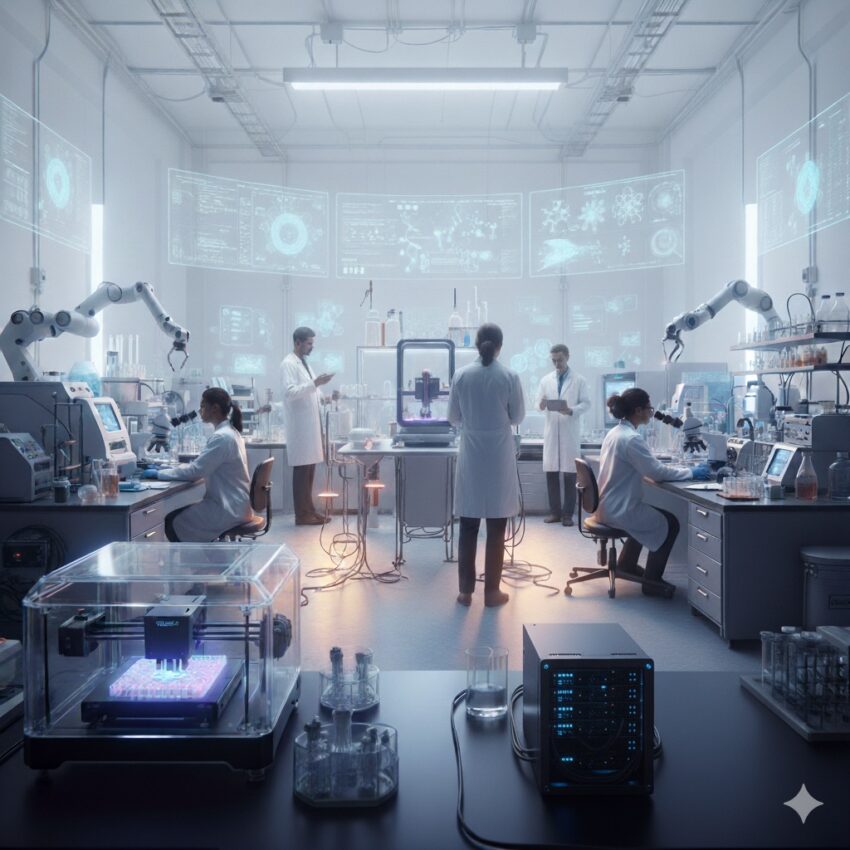
In the world of innovation, certain technologies are not just transforming industries—they are reshaping the way we live, work, and think. From AI to fusion energy, the next five years promise tangible progress in areas that have long seemed futuristic. Drawing on nearly 25 years in the innovation ecosystem, I’ve curated the top ten breakthroughs that will define the near future.
1. Artificial General Intelligence (AGI)
AI has evolved rapidly, but true general intelligence remains a horizon goal. Over the next five years, we can expect proto-AGI systems capable of planning, learning across multiple domains, and even autonomously improving their own algorithms. These systems will increasingly assist research, governance, and enterprise operations.
2. Quantum Computing
Quantum computers are emerging from laboratories into real-world applications. Within the next five years, quantum advantage for chemistry, materials, and optimization problems will become tangible. Hybrid quantum-classical systems will accelerate discoveries in drug design, energy, and logistics.
3. Gene Editing and Synthetic Biology
CRISPR and related tools have already transformed rare disease treatment. By 2030, mainstream therapeutic gene editing, AI-guided biofoundries, and synthetic biology applications will address common diseases and enable new forms of sustainable food production.
4. Fusion Energy
Fusion energy is approaching its first net-positive results. Within five years, pilot reactors may produce continuous energy, supported by advanced superconductors and AI-optimized plasma control. This could lay the foundation for clean, abundant energy on a commercial scale.
5. Brain–Computer Interfaces (BCI)
BCIs are no longer science fiction. Over the next five years, medical implants will restore movement and communication for patients, while non-invasive wearables will begin enhancing cognition and productivity, providing a new bridge between humans and machines.

6. Nanomaterials and Advanced Manufacturing
Graphene, metamaterials, and additive manufacturing are moving from lab to industry. Expect AI-driven microfactories and 4D printing, enabling self-adaptive structures, smarter devices, and localized manufacturing with unprecedented precision.
7. Next-Generation Renewable Energy Systems
Perovskite solar cells, solid-state batteries, and AI-optimized grids will mature in the next five years, delivering 24/7 renewable energy for homes, cities, and transport, and bringing the promise of a fully decarbonized energy system closer to reality.
8. Space Exploration and Resource Utilization
Reusable rockets and lunar missions are already cutting costs. Within five years, permanent lunar outposts, orbital manufacturing, and asteroid prospecting may start to reshape the economics of space, laying the foundation for off-world industry.
9. Decentralized Governance and Digital Societies
Blockchain and AI are converging to enable transparent, automated governance. In five years, digital currencies, AI-managed organizations (DAOs), and personal AI agents will begin reshaping how we interact socially, economically, and politically.
10. Consciousness Engineering and Human Enhancement
Neuroscience and AI are starting to decode cognition and emotion. Within five years, AI-driven mental health platforms, personalized cognitive enhancement, and early brain-digital twin models will enhance human potential and productivity.
Looking Ahead
The next five years are not about distant speculation—they are about tangible breakthroughs happening now, guided by AI, Big Data, and advanced computation. For innovators, investors, and professionals, understanding these technologies is not optional—it is essential.
The future is arriving faster than we realise, and those who anticipate these shifts will shape it, not just experience it.
This blog post was written with the assistance of Gemini and ChatGPT, based on ideas and insights from Edgar Khachatryan.